New Technologies and the Big Changes They Are Making. New technology is appearing faster than ever. What seemed like science fiction a few years ago is now a real product. This speed is driven by many new ideas happening at once. These are the latest tech & tools innovations changing the game.
This is not just about one new gadget. It is about new systems that work together. AI is helping to invent new medicines. New robots are building things in new ways. And new energy sources are being built to power all of it. This article will look at these new developments. We will explain what they are and how they are affecting the world.
Latest Tech & Tools Innovations Changing the Game
The most important new technologies are all connected. A change in one area often pushes other areas forward. AI needs more computing power. New computers need new materials. Making new materials requires clean energy. Below are the most significant new methods being developed right now.
1. AI That Acts, Not Just Writes
Most people know that AI can write or make images. You give it a prompt, and it creates content. This is called generative AI. It is very useful for drafting emails or making art. But a new type of AI is starting to appear. This AI can do things, not just make things. It is called agentic AI. It acts like a personal assistant that can complete tasks. For example, you could ask it to “book a flight to Miami for next Tuesday.” The AI would then check websites, compare prices, and buy the ticket. It handles all the steps on its own.
This new ability will save people a lot of time. It can manage complex tasks in the background. This frees up people to focus on more important work. This AI can use software tools like calendars, web browsers, and email. This is very different from a simple script. A script can only follow one exact path. This new AI can understand a goal. It can make a plan and fix problems if something goes wrong.
This will change many office jobs. A marketer might ask an AI to run an entire ad campaign. A programmer might ask an AI to find and fix all the bugs in a program. Humans will check the work, but the AI will do most of the steps. The main challenge is safety. Developers must be sure the AI will follow all the rules. They must also make sure it does the task correctly. It is a new and powerful idea that must be built with care.
2. Editing Our Own Biology
Scientists have a new tool to edit DNA. It is called CRISPR-Cas9. Think of it as a tiny pair of scissors for genes. It lets researchers find and change specific parts of a living thing’s code. This idea has moved from the lab to the real world. A major step was the approval of a treatment for sickle cell disease. This is the first time a CRISPR tool has been approved as a medicine. It shows the technology is ready. The treatment for sickle cell works on a patient’s own stem cells. Doctors remove the cells from the patient. They use CRISPR to fix the broken gene. The repaired cells are then put back into the patient’s body.
Read more: 20 New Technology Trends for 2026
These new cells then make healthy blood. The person is no longer sick with the disease. This is not a temporary fix. It is a one-time treatment that is meant to last a lifetime. This opens the door to fixing other genetic problems. Instead of just treating symptoms, doctors might one day cure diseases. Many other serious conditions are being studied. These include muscular dystrophy and some forms of inherited blindness.
The work is now focused on making the tool even safer. New methods like ‘base editing’ are more precise. Base editing is more like a pencil than scissors. It can change one single “letter” of the DNA code without cutting it. This field is also connected to the recent mRNA vaccines. Those vaccines used tiny fat bubbles to deliver a message to cells. Scientists are now using those same bubbles. They are using them to deliver the CRISPR tools to the right part of the body.
3. Robots That Can Walk and Think
For a long time, robots were just ‘dumb’ arms. They were bolted to the floor in a factory. They could only do one repetitive task. If anything changed, the robot would stop. The new generation of robots is very different. Companies are building robots that look and move like people. These are called humanoid robots. They can walk on two legs and use their hands to grab things. The human shape is important. Our world is built for humans. These robots can use our stairs, open our doors, and use our tools. Factories do not need to be redesigned for them.
Companies like Tesla, Agility Robotics, and Apptronik are building these. Their robots are designed to do many different tasks. They can work in a warehouse one day and a different factory the next. They just need new software. These robots learn in virtual worlds. Engineers test them in computer simulations. This trains the AI brain of the robot. They learn to balance and handle objects. Then they are ready for real-world tasks.
We are starting to see them in real jobs. Some warehouses use them to move boxes and sort packages. This helps companies keep up with online orders. It also fills jobs that are hard to hire for. These robots can also make work safer. They can be sent into dangerous places. They can handle heavy or harmful materials. This keeps human workers out of harm’s way. There is another type of new robot called a “cobot.” These are smaller robot arms. They are designed to work safely next to people. They can hold a part steady while a person works on it.
4. The Next Kind of Computer
Your computer or phone uses ‘bits’ to work. A bit is a tiny switch that is either a 0 or a 1. This is the basis of all modern computing. It is simple and reliable. Quantum computers work in a new way. They use ‘qubits.’ A qubit can be a 0 and a 1 at the same time. This strange property lets them test many possibilities at once. This gives them a huge speed advantage for certain problems. A problem that would take a normal computer thousands of years could be solved quickly. This applies to very complex math.
The main problem is that qubits are very fragile. The smallest vibration or temperature change can cause errors. This makes quantum computers very hard to build and run. They must be kept extremely cold and isolated. Scientists are now making more stable qubits. This is the key to making them useful. They are finding ways to check for errors and correct them. This is the big challenge everyone is trying to solve.
You will not buy a quantum computer for your home. They will not replace your laptop. Instead, they will be used for huge problems. They will be accessed over the internet like a special service. What will they do? They will be used to invent new things. They can simulate molecules in perfect detail. This will help scientists discover new life-saving drugs. They can also find new materials. For example, they could help invent a much better battery. They can also break many forms of computer security. This means we also need to build new security measures to be safe from them.
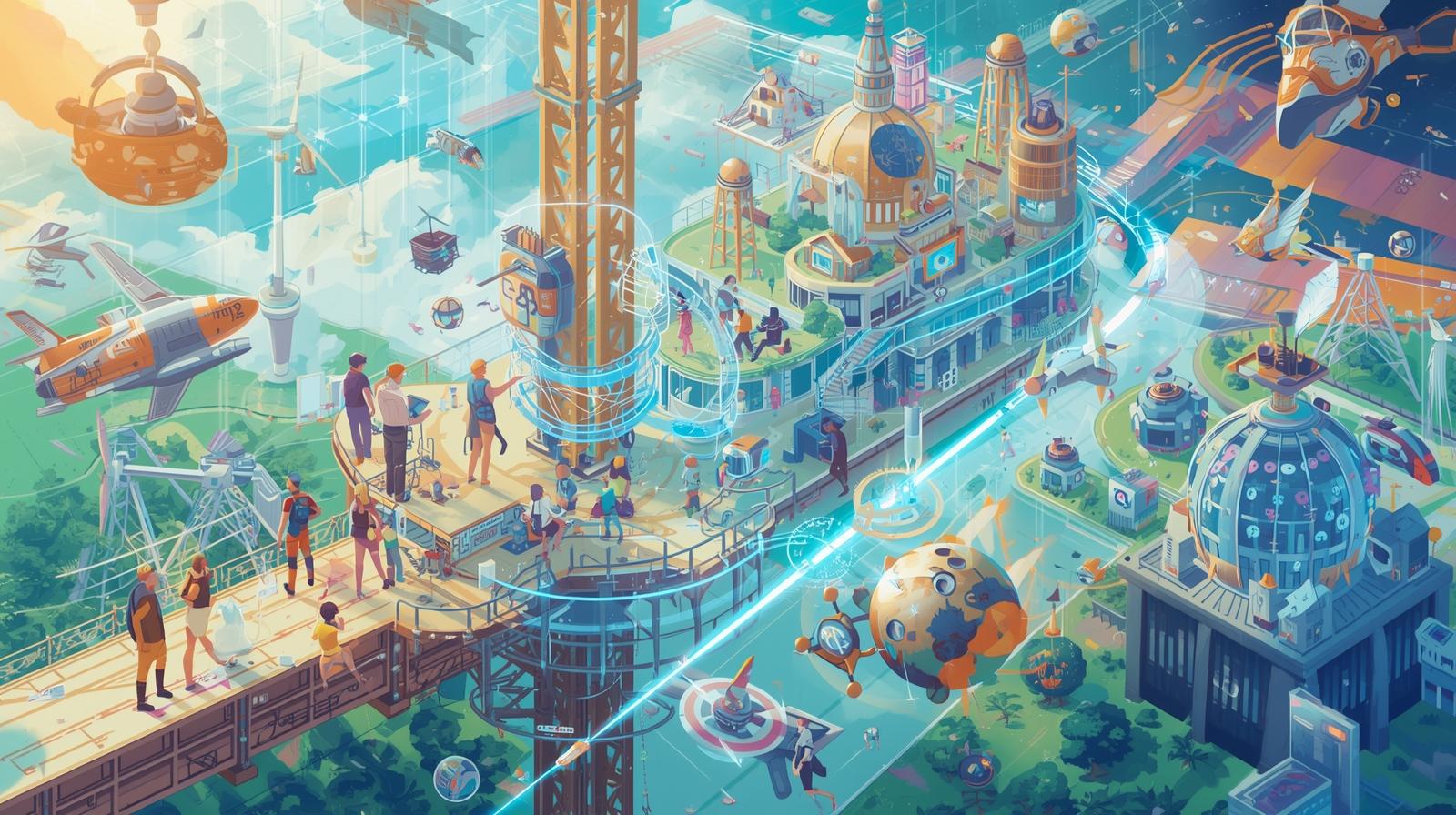
5. Blending the Real and Digital Worlds
Virtual Reality (VR) puts you in a fully digital world. You wear a headset and the real world disappears. It is often used for games or training. Augmented Reality (AR) is different. AR adds digital things to your view of the real world. You might use your phone to see how a new sofa looks in your room. For years, this technology was slow and clumsy. The headsets were big and heavy. New devices are making this technology much better. The Meta Quest 3 and Apple Vision Pro are two examples. They have clear screens and can map the room around you. This lets digital objects interact with real ones.
Apple calls its new system “spatial computing.” The idea is to treat the space around you as your computer screen. You can put up a virtual movie screen on a real wall. You can place digital notes next to your desk. This is very useful for certain jobs. A mechanic wearing smart glasses could see repair instructions. The instructions would appear right on top of the engine part. A surgeon could see a patient’s vital signs without looking away.
Training is another big use. Pilots can train in a VR flight simulator. Doctors can practice a new surgery in a virtual setting. This is safe and costs less than real-world training. A very useful new part is WebAR. This lets AR work in your phone’s web browser. You do not need to download a special app. Businesses like this. It lets customers try on clothes or see 3D product models easily.
Read more: These are the Top 10 Emerging Technologies of 2025
6. New Ways to Power Everything
All this new technology needs a lot of electricity. AI data centers use huge amounts of power. This demand means we must find cleaner ways to make energy. This has led to many new green energy tools. We are at a major turning point. This year, clean energy sources are set to produce more electricity than coal. This is a first in history. It shows the shift to green power is happening now.
This is possible because solar and wind power are much cheaper. New types of solar cells are being made. Perovskite cells are a new material. They are cheap to make and can be flexible. They could be put on windows or even on cars. The big problem is that solar and wind do not work 24/7. We need good ways to store the energy. This is the most important part of the green energy puzzle. Many new storage systems are being built.
New kinds of batteries are one solution. ‘Flow batteries’ are very large. They can store enough energy for a whole town for hours. Solid-state batteries promise to be safer and hold more power for electric cars. Another new tool is ‘green hydrogen.’ This is a clean fuel. It is made using solar or wind power to split water. This hydrogen can be burned without any carbon. This fuel can be used for things that batteries cannot run. Big ships, long-haul trucks, and steel factories are good examples. These industries are very hard to clean up. Green hydrogen offers a path.
Finally, AI is being used to manage this new grid. A ‘smart grid’ uses AI to predict when power is needed. It can move power from where it is made to where it is used. This prevents waste and stops blackouts.
Conclusion
These new technologies do not work alone. They are all connected. AI makes robots smarter. Quantum computers will find new materials for batteries. Clean energy will power all of it. The tools are moving from ideas to real products. They are solving problems in medicine, logistics, and energy. The next few years will see these tools become more common. They will change how we work and live.
New Technology Summary
| Technology Area | What It Is | Real-World Example |
| Agentic AI | AI that can understand a goal and complete tasks. | An AI that can book a full vacation (flights, hotel) for you. |
| CRISPR | A tool that can find and fix specific genes in DNA. | The new, approved one-time treatment for sickle cell disease. |
| Humanoid Robots | Robots shaped like people that can adapt to human spaces. | A robot that walks around a warehouse to pick up and move boxes. |
| Quantum Computing | A new type of computer that solves very complex math. | Inventing new medicines by simulating molecules. |
| AR / VR | Blending digital content with the real world. | Use your phone to see how a new table will look in your dining room. |
| Green Energy Tech | New ways to make and store clean power. | New types of batteries that can store solar power for use at night. |
Frequently Asked Questions (FAQ)
Q: What is the main difference between generative AI and agentic AI?
A: Generative AI makes things, like an article or a picture. Agentic AI does things. You give it a goal, and it completes the steps to achieve it.
Q: Is CRISPR gene editing safe?
A: It has become much safer. The first-ever CRISPR-based medicine for a genetic disease (sickle cell) has been approved. This shows it is safe enough for medical use. Scientists are still working to make it even more precise.
Q: Will humanoid robots take people’s jobs?
A: They will change jobs. They are mostly designed for tasks that are very physical, repetitive, or dangerous. This may fill jobs that companies have trouble finding workers for. People will likely move to jobs that manage the robots or do more creative work.
Q: When will quantum computers be common?
A: You will probably not own one. These computers are huge, very expensive, and must be kept very cold. Instead, companies and scientists will pay to use them through the internet for specific, hard problems.
Q: What is “WebAR”?
A: This is augmented reality that works in a smartphone’s web browser. You do not have to download an app. This makes it very easy for people to use.